
Textile Arts Tell Stories
A tour through We are ten thousand hands that plant seedsBy Seemil Chaudhry

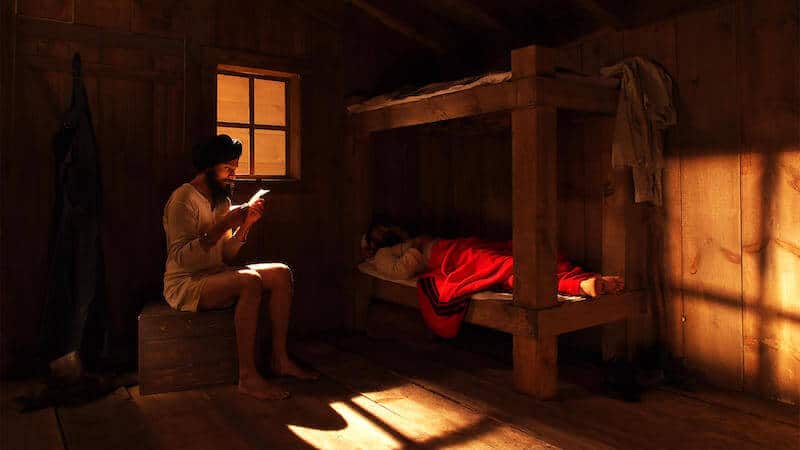
Image Courtesy of Nazal Studio
We are ten thousand hands that plant seeds
June 7, 2025 to October 5 2025
The Robert McLaughlin Gallery
Civic Centre, Oshawa, Ontario
Co-presented with the South Asian Visual Arts Centre (SAVAC)
Curated by Adebar Kamgari.
Artists: Meghan Feheley, Maureen Gruben, Sharmistha Kar, Gloria Martinez-Granados, Soledad Fátima Muñoz, and Nazal Studio
Share Article

Image credit: Toni Hafkenscheid
“Welcome to We are ten thousand hands that plant seeds. My name is Seemil, and I’ll be your guide today. As we explore the artworks, if something catches your eye, sparks your curiosity, or stirs a question—please don’t hesitate to share.”
This is how I greet visitors as they step into the exhibit. In my role as Community Engagement Assistant with SAVAC, I have the privilege of guiding people through this space—telling the stories behind each work, sharing the artists’ perspectives, and inviting visitors to reflect on their own ideas, thoughts, and interpretations. The title of the exhibit comes from the final poem of Chilean singer and activist Victor Jara, and the exhibit gathers artists whose works carry the intergenerational weight of colonialism, displacement, and genocide. Through textiles, these artists give form to what words sometimes cannot, transforming fabric, thread, and fibre into acts of remembrance, resistance, and hope.

Image credit: Toni Hafkenscheid
Here, art is not confined behind glass. It hangs from ceilings, sways with the air, and intimately greets you at eye level. Screens flicker with the artists’ own voices, speaking about their processes and memories. The space hums with colour, texture, and sound, drawing you in.
Gloria Martinez-Granados

Gloria Martinez-Granados, Hand and Labour, cross-stitch on leather, 30” x 45”, 2024. Image credit: Toni Hafkenscheid.
The first piece you encounter is Hand and Labour, a cross-stitched, photorealistic image of the artist’s father’s hand, stitched in warm skin tones onto familiar shades of brown scraps of leather. Born in Guanajuato, Mexico, and raised in the U.S., Gloria’s work reflects her family’s migration story and the sacrifices of working-class life.

Image credit: Seemil Chaudhry
She recalls childhood memories of her family gathered in a circle, labouring over leather pieces for a shoe factory. Too young to join in, she absorbed the rhythm of their work. In this piece, the scent and texture of leather honour her father’s years as a shoe upholsterer. The stitching becomes both tribute and metaphor—threads that blur borders, crossing between nations and identities, while asking us to reflect on whose labour society values.

Image credit: Toni Hafkenscheid
When I guide visitors here, I often invite them to pause and think about the “hands” in their own lives—visible or unseen—that have helped shape their path.
Maureen Gruben

Image credit: Toni Hafkenscheid.
Maureen Gruben, Stitching My Landscape, 2017, video, 6:10 mins. Commissioned by Partners in Art for Landmarks/Reperes2017. Curated by Tania Willard.

Image courtesy of Maureen Gruben.
From the corner of your eye, a flash of deep red catches your attention. On screen, you see Maureen, an Inuvialuit artist from Tuktoyaktuk, methodically weaving strips of crimson fabric through vast sheets of Arctic ice in Stitching My Landscape. Each stitch requires cutting into the ice, threading the fabric, and sealing it back with ice blocks—a repetitive, almost meditative act.

Image courtesy of Maureen Gruben.
Visitors often guess she is “stitching the land together” or “mending a wound.” These interpretations echo the work’s deeper message: a call to protect and heal the land in the face of climate change.

Maureen Gruben, Nuna, 2023, video, 9:12 mins. Courtesy of Tuk TV. Image courtesy of artist.
Across the gallery, Nuna (2023) repurposes the same red fabric into a giant cross, carved into the snow. From above, the cross is striking, almost alarming—a possible distress signal. As the fabric absorbs sunlight, it melts the ice faster, a visual metaphor for the urgent environmental crisis. Nuna, meaning “land” (but not necessarily limited to a physical place) in Inuvialuktun, speaks to the spiritual bond between people and the earth, reminding us that when the land is in pain, so are we.

Image courtesy of Maureen Gruben.
Sharmistha Kar

Sharmistha Kar, Soft Shelter-Walking together, Bunka on tarpaulin, 8’ x 10’, 2021. Image credit: Toni Hafkenscheid.

Sharmistha Kar, Soft Shelter-Tabernacle and hope, Bunka and hand-embroidery on layered fabric, 17” x 46”, 2020. Image credit: Toni Hafkenscheid.
A vivid blue tarp stitched with tent motifs greets you next. Sharmistha, formerly based in Hyderabad, India, and now based in Montreal, utilizes both Indian and Japanese embroidery traditions to explore themes of migration, shelter, and identity.


Sharmistha Kar, Soft shelter-Next to a river, hand-embroidery on cotton fabric, 26” x 60”, 2025. Courtesy of artist. Image credit: Toni Hafkenscheid.
Visitors often recall fond memories of camping when they see the tents, but Sharmistha’s imagery points to a harsher reality—tents as fragile homes for those displaced or unhoused. Inspired by Hyderabad, where luxury developments rise alongside sprawling tent settlements of the working class, her work exposes the contradictions of capitalism. The blue tarp, a symbol of impermanence, becomes a testament to resilience and survival.


Image credit: Seemil Chaudhry
Soledad Fátima Muñoz

Soledad Fátima Muñoz, Carmen de Andacollo (from the series Wounds of Chile), 2021, double-woven copper and cotton thread, 43” x 50”. Image credit: Toni Hafkenscheid.

Image courtesy of Soledad Fátima Muñoz.

Image credit: Seemil Chaudhry
Soledad’s woven copper and cotton piece shimmers in the light, drawing you closer. Carmen de Andacollo references a Chilean mining town where copper is both a blessing and a curse–it is one of Chile’s largest and natural resources, but also largely exploited by U.S. mining corporations, resulting in environmental devastation and illness.


Photo courtesy of Soledad Fátima Muñoz.
Her piece Desaparecidxs memorializes the 100 missing victims who disappeared under the Pinochet dictatorship, their portraits woven from copper and thread. The same resource that drove exploitation becomes a medium of remembrance, making visible those that the regime tried to erase.

Soledad Fátima Muñoz, Desaparecidxs, 2018, copper wire, cotton and electronics, 43” x 80”. Image courtesy of artist.

Image courtesy of Soledad Fátima Muñoz.
When visitors realize they are looking into the faces of farmers, poets, miners, and activists—ordinary people targeted for their convictions—the room grows silent.
Megan Feheley

Megan Feheley, sunrise part 2, orange tarpaulin, 10’ x 12’, 2021. Image credit: Toni Hafkenscheid.
As I lead visitors further into the upper gallery, they feel the comforting glows of orange from Megan’s tarpaulin installations, sunrise part 1 and sunrise part 2. Cut with intricate patterns inspired by Indigenous birch bark biting, the works create shifting shadows on the floor and walls.

Image credit: Seemil Chaudhry

Image credit: Seemil Chaudhry
The texts, in Cree, form a call and response:
“Is the dawn coming?”
“Yes, the day is here.”

Image credit: Seemil Chaudhry
Made during the pandemic, these works honour Megan’s late grandfather—an elder and one of the last Cree language-keepers in their family—while speaking to collective grief, survival, and the transmission of knowledge. The use of tarpaulin, a product of industrial extraction, complicates the work: it is both a symbol of harm to the land and a potential survivor of climate catastrophe.

Image credit: Toni Hafkenscheid.
Nazzal Studio

Nazzal Studio, Ramallah Dress (from the series What Should Have Been Home), 2023, nylon, 71”. Image credit: Toni Hafkenscheid.

Image courtesy of Nazzal Studio
Nazzal Studio, founded by designer Sylwia Nazzal, brings Palestinian heritage and resistance into the language of fashion. The Ramallah Dress takes the shape of an elderly woman Sylwia once met in Jerusalem, its lining printed with the names of Palestinian civilians killed under occupation.

Nazzal Studio, Gold Jerusalem Jacket, 2023, nylon, ink and satin, 82.5”. Image credit: Zaid Allozi.

Image courtesy of Nazzal Studio
Similarly, the Gold Jerusalem Jacket carries an inner lining filled with more names—its physical heaviness mirroring the emotional weight of loss. These garments are beautiful, but also burdensome, embodying the grief and resilience of a people under siege.
Image courtesy of Nazzal Studio.
Though the artists in We are ten thousand hands that plant seeds come from different lands and histories, their works speak to one another. They reveal how textiles—mundane, everyday materials—can hold memory, resist erasure, and bear witness to injustice. The act of stitching, weaving, and patching becomes both an artistic process and a form of care, a way to mend what has been broken and keep stories alive.
The most rewarding part of guiding visitors through this exhibition has been witnessing their reflections—hearing someone say they learned something new, felt inspired, or saw a connection to their own life. These conversations transform the gallery into a living archive, where the voices of artists, visitors, and guides intertwine.
Every tour leaves its own trace here, just as every stitch in these works carries the mark of a hand, a memory, and a seed for the future.

Seemil Chaudhry is a visual artist and cultural researcher based outside of the Greater Toronto Area (Tkaronto).
More
Explore More Rungh