
Métis Artists as Non-State Actors
Métis Citizenship and Métis IdentityBy David Garneau

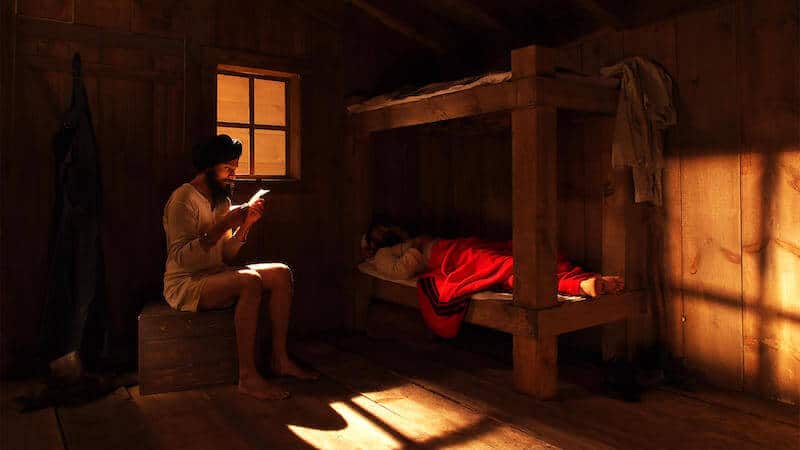
Image Credit - David Garneau - Woven and Free 2022 acrylic on panel 24 x 20. Remai
Share Article
Two summers ago, I wandered the sun-stroked cultural carnival that is Back to Batoche. The air rang with fiddles, the rhythm of jigging feet, and laughter. I breathed sage, camp smoke, and the dust kicked up by barreling horses. I ate bannock burgers and too much else. My arms were weighted with Métis sashes, sash topped boots, sash caps and bags. Joining me in soaking up our culture, refueling for another year, was my youngest brother, Mike, and my eldest kid, B. We scanned the crowd for family resemblances. Shook hands, caught up. I decided there and then to apply for Métis citizenship.
You can be Métis and not be a member of a/the Métis Nation, and you cannot. Along with First Nations and Inuit, Métis are recognized in the Canadian Constitution (1982) as an Aboriginal people. That is, we are a distinct people/Nation who emerged in the historic North-West prior to the formation of Canada (1867). This recognition is political, legal—and colonial. It requires contemporary individuals to be registered by a Métis political entity that is itself recognized by the colonial state. However, prior to 1982, and especially before 1867, while Métis were politically organized, they were not all, always, and everywhere so. Kinship bonds and cultural participation were more durable means of determining identity. The Métis and the Métis Nation are not identical.
I have a friend, and fellow academic, who regularly celebrated his Métis identity in his art. One day, the Métis Nation that organized his territory informed him that he was not Métis. Yes, he had a Settler father and Indigenous mother, but neither had Métis lineage. Not all descendants of Indigenous/European unions are Métis. Our Métis ancestors are mixed union offspring who established communities distinct from both First Nations and Settler communities prior to Canadian Confederation. Their descendants are those who continue to recognize themselves as a people distinct from their First Nations and European ancestors, and who are recognized as Métis by Métis.
This last requirement is a circular dependency: only Métis can affirm Métis identity. It is circular, but also axiomatic, in the same way that only the Canadian government can determine who is a Canadian citizen. This form of Métis identity is political and legal. Prior to the founding of both the Métis and Canadian nations, individual and collective Métis understood and conducted themselves as a distinct people. They knew their similarities with each other and differences from the nations that neighboured them and the states that endeavored to subsume them. Understanding and declaring yourself to be Métis is not enough. Métis are those self-describing folks who are also recognized and enrolled by a Métis political entity. However, political identities are on/off switches that fail to recognize the quality and complexity of individual Métisness. Your card does not indicate the depth of kinship bonds, practices of visiting and other forms of cultural enactment that were and are stronger determinants of identity than political recognition. This living core of Métis cultural identity persists. There is Métis, the political body, and Métis the people who are organized by those bodies but who also precede and exceed such organization. This difference is central to Métis identity. Cree called us, and we adopted the name, Otipemisiwak, “the people who own themselves.” This has a double sense. It means that Métis are a self-governing collective, a People. It also means that Métis are self-governing persons. The struggle between this collective and individual sense of freedom is central to Métis history and identity.
For decades, I resisted the political legitimization of my identity. I experienced Métisness as a living relationship: with kin, history, and territory, with possibilities beyond colonial binaries. I didn’t want my identity to be fixed, determined, and dependant on a political organization—a recognition that might be rejected or revoked for political reasons. Much of my anxiety around applying for citizenship was fear of rejection for reasons, or whims, beyond kinship and culture. I heard of a family in Manitoba who were un-enrolled for their political differences with the current leadership. Perhaps the (temporary) powers that be would not like my dressing up as a noose wearing ghost of Louis Riel and accosting statues of John A. Macdonald across Canada.
Riel is said to have said "My people will sleep for one hundred years, but when they awake, it will be the artists who give them their spirit back." Métis politicians woke the people. Artists give “my people” what politicians cannot. As an artist, I serve my community, but I am also called to express myself, to follow my research (my/our “spirit”) wherever it might lead. I serve “my people” but not necessarily my state. I am called to do more than decorate or to provide propaganda for either the Métis Nation or Canada.
What changed my mind? Why did I apply for citizenship? While I was indeed swept up in the romance of Batoche, and encouraged by my brother, who got his card a few years earlier, my drive to apply was rooted in baser motivations: fear and disgust.
Pretendian is colloquial pejorative that describes non-Indigenous people who claim to be First Nations, Inuit, or Métis. Most are folks who, raised in the relative privilege of middle-class and white entitlement, have social, physical, educational, and psychological resources less available to most of their Indigenous colleagues. And, because their deception requires a distancing from their non-Indigenous families, many tend to be freer from the non-optional entanglements, social obligations, and frictions essential to Indigenous lived experience. All this lubricates their rise, especially in the academy and the arts during a cultural moment bent on redressing historic wrongs. Why do they do this? I’m not interested. Just as I choose to invest more in non-colonial creative action rather in critiques of the colonial enterprise, I prefer to describe the harms caused to Indigenous folks by identity fraud rather than center criminals and speculate on their motives.
I teach studio art at the University of Regina. Our campus houses the First Nations University of Canada. 15% of our students are Indigenous. Piapot, the First Nation Buffy Saint Marie claims as her own, is less than an hour away. CBC’s outing of her as a Pretendian in Nov. 2023 continues to reverberate, confound, wound, and divide. Earlier that spring, our former president, Vianne Timmons, who left Regina to become president of Memorial University, stepped down when her claims to Mi'kmaw ancestry were found to be unfounded. In the past six years, I discovered that several artists and curators who presented as Indigenous when I curated, partnered with, or hired them, turned out not to be able to support those claims.
This summer, I was a co-facilitator, with Jason Baerg and Liz Barron, of the Visual Arts Residency – Kapishkum: Métis Gathering at the Banff Centre for Arts and Creativity. For five weeks, 18 artists made art, visioned, and re-visioned Métis identity and aesthetics. It was a moving, generative experience. However, it was disrupted by police presence, surveillance, and other restrictions imposed by the G7 meeting security, and stunted by the lack of a Métis creative Elder. We had engaged an Elder artist. They were to offer wisdom and guidance, a non-institutional heartbeat. Just before the gathering, their Métis ancestry was challenged. They were unable to present proof. We had to proceed without them and couldn’t find a replacement at that late date.
Contending with cultural fraud is gutting, exhausting, demoralizing. It makes it difficult to trust. We know who we are, but we don’t know who everyone is. If we want to engage Indigenous others, words, their word, is not enough. Political recognition is an interim solution to a political identity crisis. As we recover as a People, richer forms of communal self-recognition will be revived. In the meantime, we cultural Métis continue as non-state actors shaping our individual and collective selves.
So, I am now a citizen. It doesn’t change my sense that Métis is a perpetual negotiation, a being and becoming, but it does ease my mind some. I am official, legit, claimed. The ground is firmer though I prefer to fly.
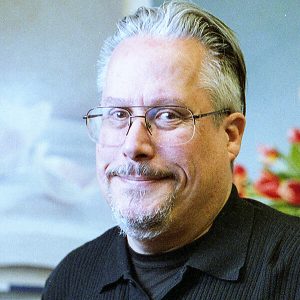
David Garneau is a painter, curator, and writer who engages creative and critical expressions of Indigenous contemporary ways of knowing, being, and doing.
More
Explore More Rungh